Why Agor Is Leaving Unix Impersonation Behind
By Maxime Beauchemin · August 17, 2026
tl;dr: Agor has retired its experimental strict and insulated Unix execution modes. They
tried to turn an Agor server into a coherent multi-user Unix box: one host account per person,
POSIX groups for branches, filesystem permissions derived from RBAC, and homes that also worked over
SSH. The idea was appealing. The implementation became a growing pile of privileged reconciliation
logic that did not scale to thousands of branches, shared filesystems, or Kubernetes.
Now that Agor’s Linux sandbox is viable, we have a simpler model: application RBAC remains the source of truth, and local executor processes receive an RBAC-derived filesystem view inside a bubblewrap mount namespace. External and Kubernetes deployments use Agor’s executor launcher interface and own their runtime topology. We are making this break before 1.0 rather than asking a security review, or our users, to reason about a model we no longer believe in.
The original vision was good
The first model was easy to explain.
Every Agor user would also be a Unix user. Every branch would have a Unix group. Agor’s RBAC system would project into POSIX ownership, groups, modes, and ACLs. A user could open an Agor terminal or SSH into the machine and see the same home directory and the same branches. If we later wanted to put containers on top, we would already have a familiar UID/GID model underneath.
That sounded manageable. It was also attractive in a very Unix way: use the operating system’s native primitives instead of inventing new ones.
The modes eventually called strict and insulated grew from that idea. Agor created users and
groups, synchronized memberships, prepared homes, maintained branch symlinks, repaired ownership
and permissions, and used sudo to launch work under another account.
It worked just well enough to reveal why it was a dead end.
POSIX permissions are not application RBAC
Traditional Unix permissions give each inode an owning user, one owning group, and everyone else. Each class gets read, write, and execute bits. This is an elegant model for a machine with a modest number of relatively stable users and groups.
Agor’s authorization graph is different. A branch can have owners, direct grants, organization groups, board-derived grants, and several permission tiers. Membership and access can change while agents are creating thousands of files. Reducing that graph to one owner and one group is lossy.
ACLs looked like the answer. Linux filesystem ACLs add named users and groups and support default ACLs that can be inherited by new directory entries. But “inherited” is not the same thing as an application-level invariant. Creation modes, umasks, rename and copy behavior, archive extraction, Git operations, tooling, and filesystem support all affect the resulting permissions. The kernel enforces the ACL that exists; the hard part is guaranteeing that the correct ACL continues to exist on every inode created by every tool.
Consider a shared writable branch. I grant you access to my directory. You run a tool that creates a file with ownership or effective permissions that exclude me, or exclude the Agor daemon that must later inspect, move, or clean it up. Agor can try to repair the tree, but now authorization is eventually reconciled rather than structurally enforced.
That leads to recursive chown, chmod, and ACL repair. On a large repository, those operations
are slow and brittle. They race with active work. And because the daemon cannot repair arbitrary
ownership as an ordinary user, it needs narrowly configured, but still security-sensitive, sudo
authority.
At that point, the “simple native Unix model” has turned into a privileged distributed state reconciler for inode metadata.
Shared storage makes it harder
Agor needs to run on Kubernetes. That usually means work is not confined to one machine’s local disk. Teams reach for NFS-family services, cloud network filesystems such as Amazon EFS , or systems such as CephFS.
Those systems differ in ACL models, inheritance behavior, mount options, identity mapping, and which operations are available to a containerized process. Even when ordinary POSIX modes work, the exact ACL and ownership semantics Agor would need are not uniformly portable.
UIDs and GIDs create another control plane. A numeric identity written by one node must mean the
same thing on every node that mounts the volume. Agor would need to allocate those numbers, avoid
collisions, propagate the mapping, and keep containers, hosts, shared storage, and perhaps SSH
logins aligned. Names in /etc/passwd and /etc/group are only local views over those numbers;
mounting a shared filesystem does not distribute the identity database.
This is all possible with enough infrastructure: directory services, identity-aware storage, careful pod security contexts, and operational discipline. But Agor would be rebuilding part of an enterprise identity platform inside a product whose actual job is orchestrating coding agents.
Then came thousands of branches
Agor instances can see thousands of branches. Under the original model, branches became Unix groups and collaborators accumulated supplemental group memberships.
Eventually, id prints a wall of groups. Processes approach operating-system and runtime limits on
supplemental memberships. Operators start tuning host parameters and debugging why one process has
fresh memberships while another long-lived process does not. Agor used sudo -u in places not to
change identity, but simply to force a fresh group calculation.
When a product-level permission change requires OS-group creation, membership reconciliation, filesystem repair, process refresh, and special handling for every storage backend, the abstraction is telling you something: it is the wrong abstraction.
Back to the actual guarantees
We went back to first principles. What does Agor need to guarantee?
First, application RBAC must remain authoritative. A user who cannot access a branch through Agor must not gain access because of stale host state.
Second, agent processes should not see daemon secrets, other users’ homes, sibling branches, or files outside the work they are authorized to perform.
Third, execution identity and tenant identity must survive API requests, queues, child sessions, schedules, launch tokens, storage selection, and external runtimes.
Fourth, Agor must remain practical on a laptop, a large shared Linux host, and an HA or Kubernetes deployment without pretending those environments have the same security boundary.
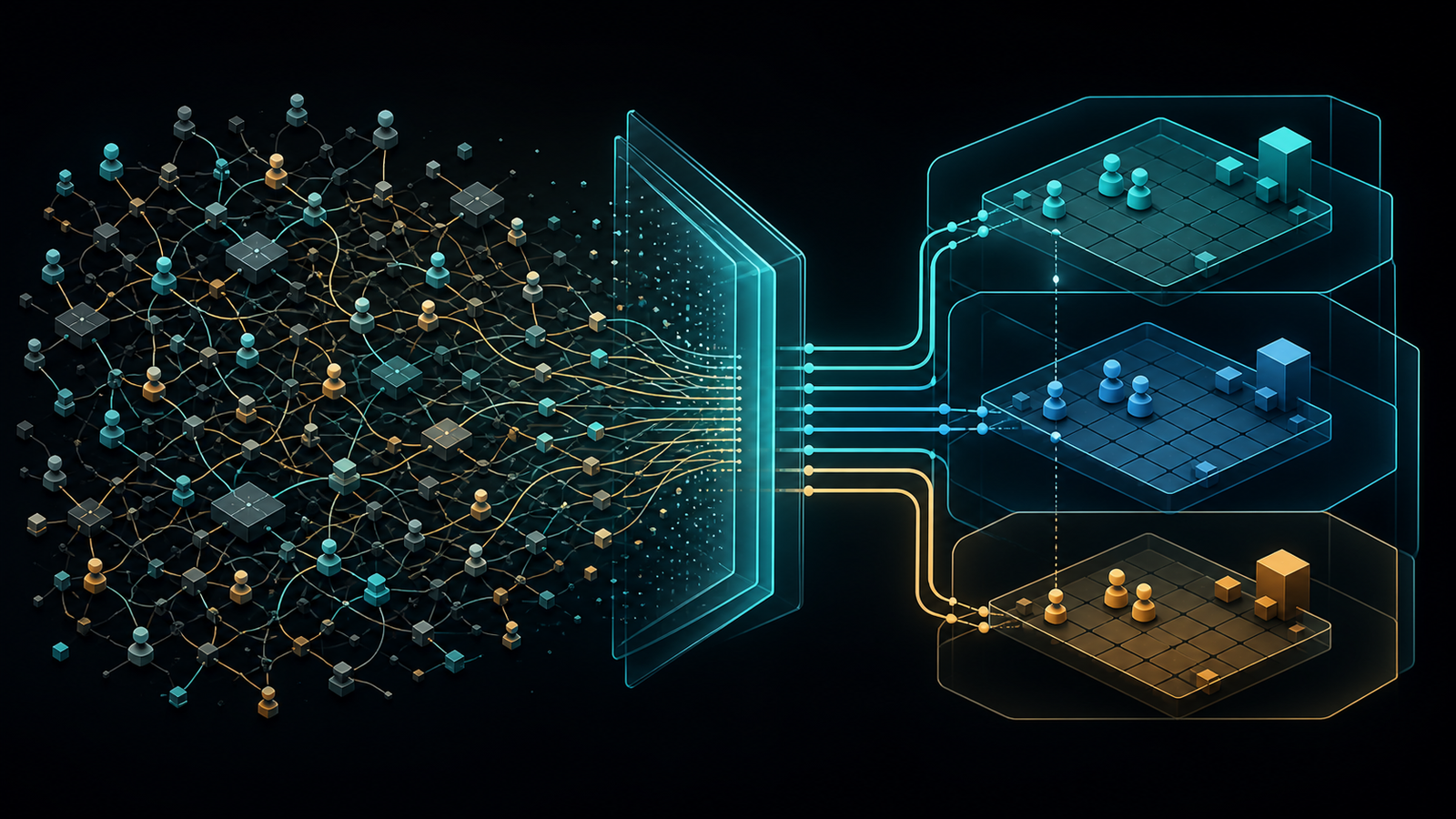
The old design tried to satisfy these guarantees by continuously making the host filesystem look like the application database. The new design derives an execution view from the database at the moment a process starts.
Local Linux: an RBAC-derived sandbox
On Linux, Agor can now launch agent sessions and web terminals inside a bubblewrap mount namespace . The process still runs as the daemon’s host user, but it sees a deliberately constructed filesystem:
- its authorized branch, mounted read-write or read-only according to Agor RBAC;
- its persistent execution home;
- the repository metadata required for Git operations;
- the tools and system paths it needs;
- masks over daemon configuration, database state, sibling homes, unauthorized branches, and common host credential directories.
The policy fails closed. If sandbox mode is selected and bubblewrap is unavailable, Agor does not quietly run the agent without isolation. The sandbox deliberately shares the host network namespace because executors need to reach the daemon and model providers; this is filesystem and process-view containment, not a claim of network isolation or a hostile-tenant VM boundary.
Most importantly, permission changes no longer require Agor to materialize a POSIX group or repair an entire tree. RBAC is translated into mounts for a new execution. There is no host account to create, no password to synchronize, and no supplemental group list to refresh.
For continuity, Agor still has a tenant-local per-user home key and an optional explicit migrated
home path. The legacy field may still be named unix_username for a while, but in the new local
model it is not a host account. It is a stable selector for an execution home. We would rather
remove the dangerous machinery now and improve the naming in a smaller follow-up than combine two
migrations into one risky release.
What about macOS and trusted local use?
Bubblewrap is a Linux primitive. Agor will continue to support a simple local mode for trusted use: processes run as the daemon user without an Agor filesystem-isolation guarantee. That is useful for personal development and controlled environments, but it is not a silent fallback from sandbox mode and it should not be marketed as equivalent security.
A future macOS sandbox can have its own deliberate design. We will not preserve a broken Linux Unix- account architecture merely to make the configuration look uniform across operating systems.
Kubernetes and external execution
Everyone runs Kubernetes differently. Images, schedulers, storage, workload identity, secrets, network policy, cancellation, and observability are infrastructure decisions. Baking one topology into the Agor repository would make an already substantial project responsible for governing every cluster it can launch into.
Agor instead provides an external executor interface through executor_command_template, with
trusted tenant and user identity available to the launcher. In delegated mode, the external
substrate owns the mapping from that identity to runtime, home, credentials, and storage.
This interface is not magic. A shell template does not prove isolation, and Agor’s local bubblewrap policy does not automatically apply inside a pod. Operators own the governance and topology of their external executor environment. Our job in the open Agor codebase is to make the boundary explicit, propagate trusted identity, fail loudly on incomplete configuration, and avoid coupling the daemon to user-land files.
That last point is foundational: user-land filesystem work flows through the executor boundary. Underneath it, Agor has been building HA-aware execution and a tenant-safe application substrate. Agor Cloud adds the opinionated orchestration and infrastructure required to operate those pieces as a service; the core repository does not need to absorb every Cloud topology to make external execution possible.
Why make the break now?
Agor is pre-1.0. That is precisely when we should delete an experimental security model that did not fulfill its promises.
Keeping strict and insulated around would not be conservative. It would ask users and security
reviewers to reason about sudoers rules, host accounts, password synchronization, POSIX groups,
ACL inheritance, recursive repair, stale memberships, and storage-specific behavior, even though
our future architecture no longer relies on any of it.
We preserved a final 0.24 transition release containing the migration scripts and documentation, then made 0.25 intentionally breaking. The practical migration is:
- back up the database, configuration, and storage;
- drain work and stop Agor;
- record existing per-user home paths where continuity matters;
- make repositories, branches, and homes accessible to the daemon account, typically by changing owner/group in a controlled, mount-bounded migration;
- enable sandbox mode and verify home continuity, Git writes, branch RBAC, and secret masking;
- upgrade to 0.25 or later, which no longer contains strict/insulated machinery.
The existing migration scripts are a reference implementation, not a promise that Agor can infer the safe ownership operation for every host. Automatic cleanup of old users and groups would be especially dangerous on shared machines, so stale host objects are better handled explicitly after the rollback window.
A smaller system is a safer system
This change removes code that creates host users, synchronizes passwords, manages thousands of
groups, rewrites ACLs, repairs ownership, maintains user-home symlinks, and launches executors with
sudo. It removes configuration combinations whose guarantees were difficult to explain and even
harder to test.
What remains is more honest:
- simple for trusted local execution;
- sandbox for fail-closed local Linux filesystem isolation derived from Agor RBAC;
- delegated external execution for infrastructure that supplies its own runtime boundary;
- Agor groups and RBAC as application concepts, without projecting them into host POSIX state.
The lesson is not that Unix permissions are bad. They are excellent at what they were designed to do. The lesson is that a dynamic, multi-tenant application authorization graph should not be continuously compiled into global host identity and inode metadata unless operating that identity system is the product.
It is not our product.
Agor’s product is giving teams a reliable place to orchestrate agents. The best thing we can do for that mission, and for the security review in front of us, is slash the machinery we no longer trust, make the remaining boundaries explicit, and move forward with a system small enough to understand.
A note on open source and Agor Cloud
Agor currently uses the Business Source License . The repository license is the authority on what is permitted. In practical terms, our intent is to make Agor available to builders and teams, including for internal production use, while preventing a third party from taking the project and selling Agor itself as a competing commercial service.
I have spent more than a decade writing open source software, including starting Apache Airflow and Apache Superset. With Agor, I wanted to try a “fairly open” model: make the code available and useful to builders and teams, while preserving room for the company doing the work to fund it through Agor Cloud.
We are curious to give BSL a real try and listen to the community. Licensing lives on a spectrum, but it also behaves like a ratchet: opening further is easy, while taking rights back later is the kind of move we never want to make. So we would rather start with a boundary we can sustain, learn from how people use Agor, and keep our options open to make it more permissive over time.
Agor Cloud will carry opinionated deployment, multi-tenant orchestration, and operational guarantees on top of the public substrate. That commercial boundary is also an architectural boundary. The open repository should provide strong primitives and clear interfaces; it should not become an ever-growing collection of every infrastructure topology our hosted service may need.
We think that is a fair trade. We will keep explaining what lives on each side of it, and we welcome feedback as we learn.